This page demonstrates how the GMCC™ can work in the real world: a serious command campus built for real-time monitoring, operational control, alert management, engineering oversight, resilience, and rapid response across multiple deployment environments.
The goal is not just to show a building. The goal is to show a complete operational system: what the center looks like outside, how it functions inside, how the command floor is organized, what engineering and resilience infrastructure it needs, and why the capital cost rises when the facility is built to real mission-critical standards.
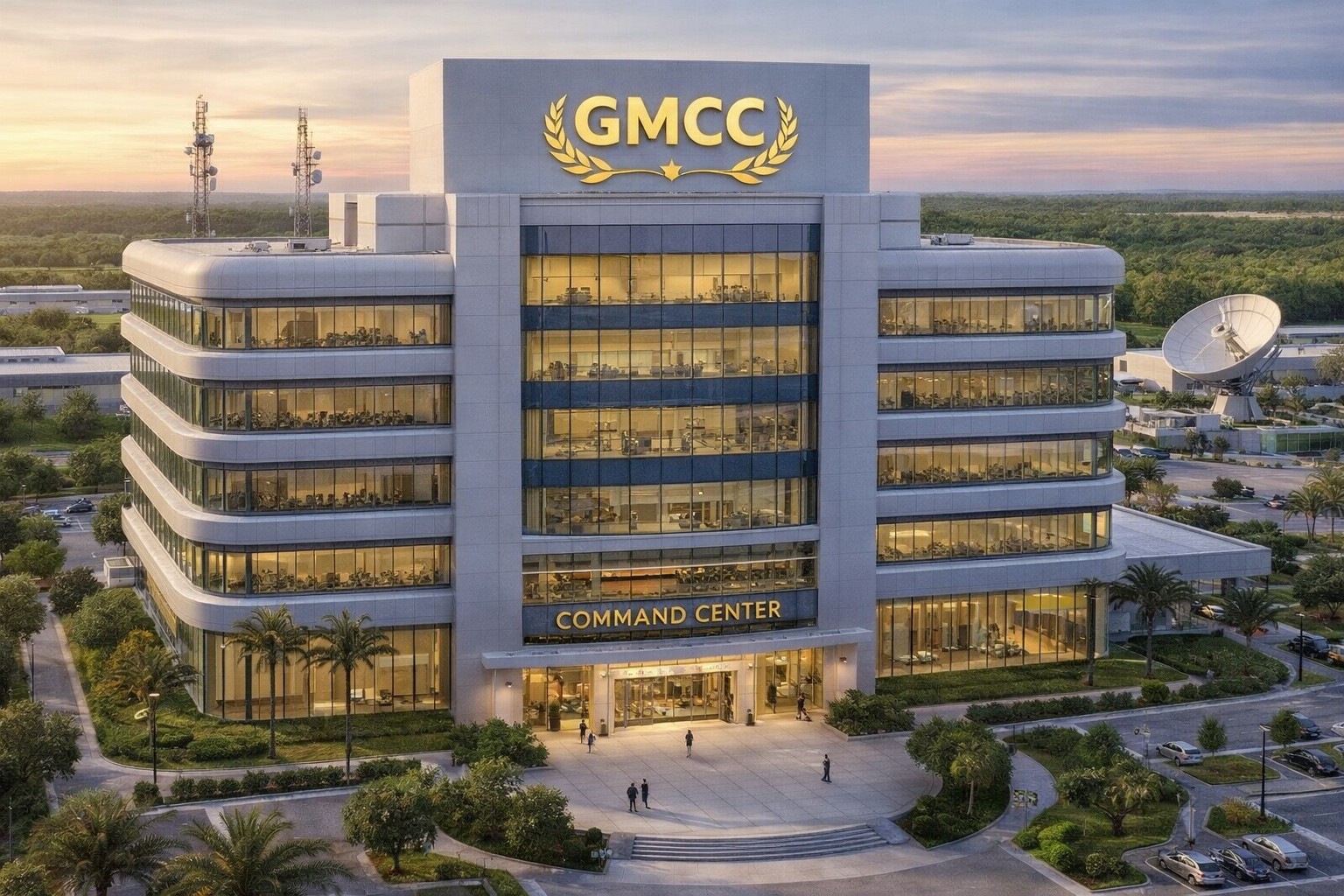
The GMCC™ should look like a flagship command facility, not a generic office block. The exterior needs to communicate confidence, precision, readiness, and technological authority. The architectural language should combine clean glass, dark structural lines, controlled lighting, hardened service areas, and a secure, high-end institutional arrival sequence.
A bold primary façade with signature glazing, strong horizontal forms, controlled gold-accent lighting, and a clean executive entrance creates immediate recognition. The building should project seriousness, not flash.
The site should include controlled vehicle access, camera coverage, delivery routing, protected service zones, and clear separation between public-facing arrival areas and backend mission-critical support zones.
A real command center requires a dedicated infrastructure zone for generator systems, battery backup, switchgear, cooling support, telecom entry, and maintainable equipment access without disrupting front-of-house operations.
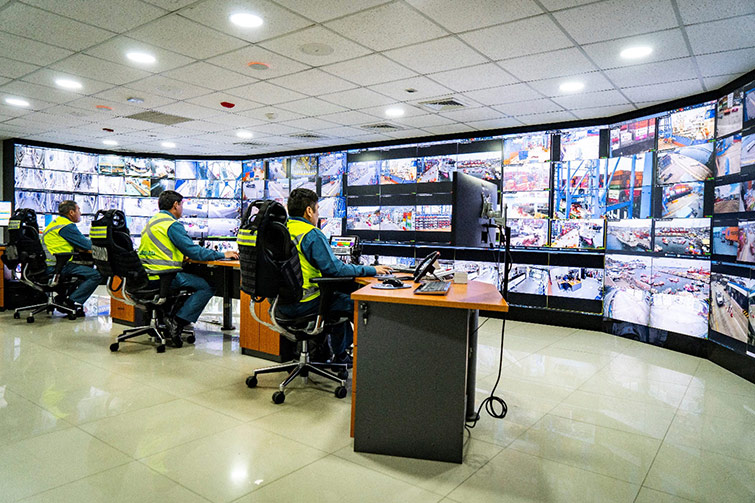
A true GMCC™ is a system-of-systems building. The interior must support command visibility, real-time collaboration, technical fault handling, engineering maintenance, executive review, and live demonstration. Every interior zone should have a purpose in the chain from incoming signal to final action.
Tiered or flat command room with video wall, live dashboards, duty stations, supervisor positions, response escalation pods, acoustic control, and 24/7 operations furniture.
Dedicated monitoring for connectivity health, device status, bandwidth, remote endpoint integrity, uptime, alarms, and service continuity.
Security monitoring for physical access events, cyber alerts, device trust, abnormal behavior, incident review, and escalation management.
Repair benches, hardware validation, firmware/software testing, spares management, sensor QA, and prototype evaluation.
Controlled network core, rack rows, switching, compute, edge analytics, storage, telecom handoff, and environmental monitoring.
High-level command review room for strategy, customer demos, crisis decisions, and stakeholder presentations with isolated AV capability.
Operator training, scenario simulation, onboarding, incident rehearsal, and product demonstration for partners, clients, and future deployments.
A polished walk-through environment where visitors can see the GMCC™ story, hardware ecosystem, platform dashboards, and deployment models.
Shift rooms, break areas, secure storage, print/copy, incident huddle rooms, quiet rooms, and rest/recovery support for around-the-clock teams.
The center should be designed around a clean operational chain. This makes the whole system easier for engineers, contractors, integrators, and future investors to understand.
Remote devices, entry systems, wearables, scanners, sensors, cameras, environmental modules, and monitored assets send continuous status and event data.
Secure network pathways move data to the command environment through internet, cellular, private links, VPN routing, and authenticated device sessions.
Ingestion, rules engine, alert logic, device health monitoring, analytics, dashboards, identity control, escalation workflows, and reporting engines process events.
Command staff review live conditions, verify alarms, dispatch actions, coordinate support, involve engineering, and escalate incidents when thresholds are crossed.
Response actions, service interventions, issue resolution, event documentation, lessons learned, and executive visibility complete the operational loop.
This is where the cost becomes real. The visible command floor is only one part of the project. The hidden resilience layer is what turns a nice room into a serious command center.
UPS, backup generation, transfer switching, protected critical circuits, and segmented load strategy for command room continuity.
Redundant cooling paths, server room environmental stability, monitoring, and failure-safe design for continuous technical operation.
Carrier diversity, segmented internal architecture, secure routing, management networks, and resilient backbone connectivity.
Access control, layered security zones, camera coverage, visitor control, badge logic, secure storage, and audit-ready event logging.
This is a conceptual capital view for a serious GMCC™ campus. It is not a contractor bid. It is here to show the likely financial weight of building the center properly rather than pretending a mission-critical command campus can be built like a simple office suite.
Adjust the size and build level to see a rough conceptual total.
The smartest path is usually phased: prove the command concept first, then scale into the flagship campus.
Website, 3D visual concepts, system maps, dashboard mockups, investor-grade materials, and operational architecture used to demonstrate how GMCC™ works before full construction.
A smaller real operating room with live dashboards, device telemetry, operator workflows, and resilience backbone proving the concept in a contained environment.
Expand into a larger dedicated site with proper command floor, engineering support, network core, security zones, and stakeholder demonstration capability.
Full architectural statement campus designed for 24/7 monitoring, customer engagement, training, product evolution, resilience, and future national or global expansion.