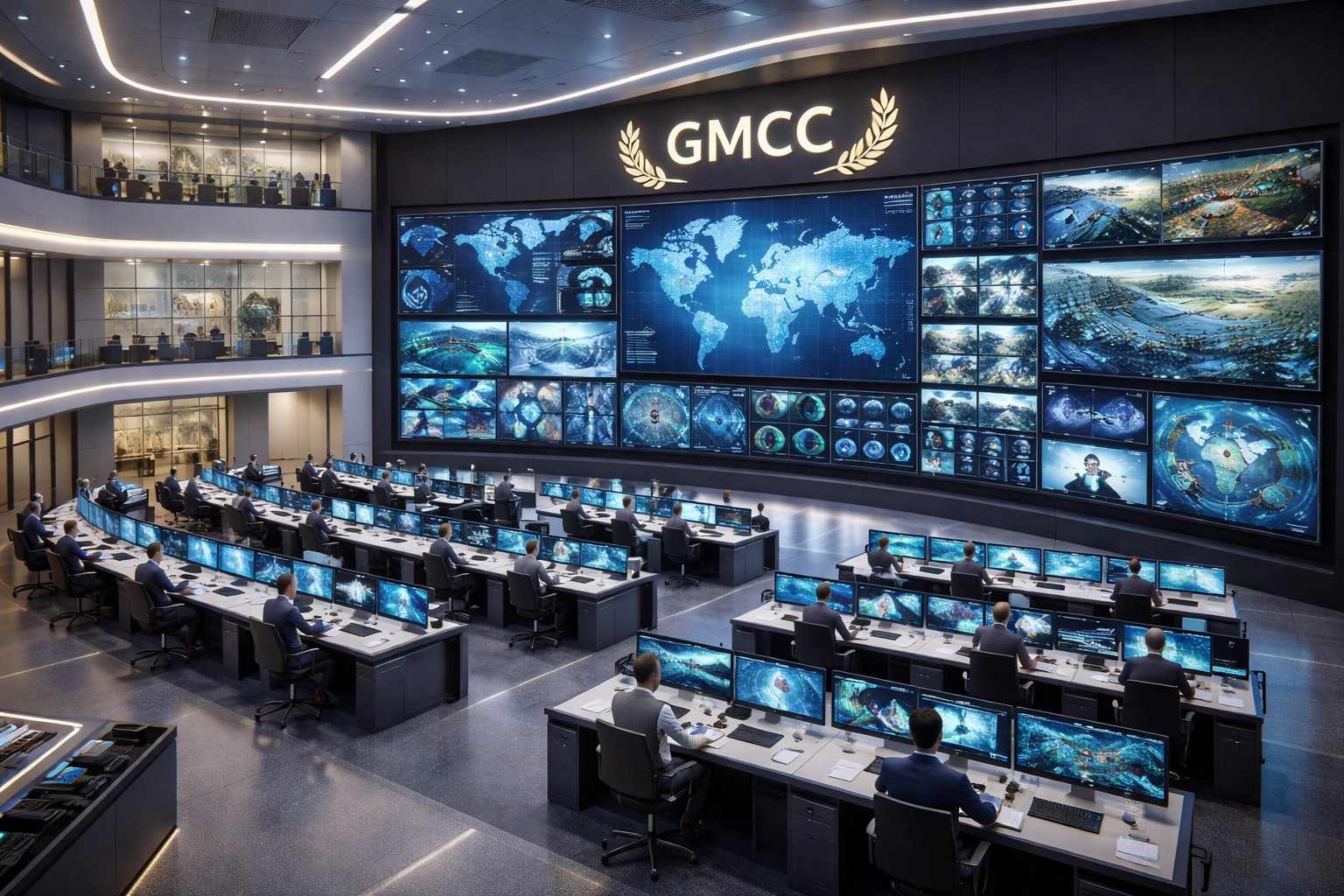
This page demonstrates how the GMCC™ can be structured from end to end — beginning with BSS™ devices and entry systems, moving through data intake and intelligence layers, and ending with dashboards, alerts, reporting, operators, and coordinated response workflows.
Intake, processing, command, reporting, and response working together.
One operational center coordinating multiple sites and systems.
Built to support continuous monitoring and command awareness.
Structured for multi-site and future international deployment growth.
This is the clean online representation of how the GMCC™ command center can operate from raw detection to final response.
Each layer below has a specific role. Together, they form the full logic of the center.
Where live system data first enters the environment.
Where incoming data is organized, filtered, and interpreted.
Where operators gain live visibility through dashboards and active panels.
Where important events are escalated and prioritized for action.
Where logs, records, event history, and performance visibility are maintained.
Where the system supports intervention, routing, and command action.
The architecture begins with the field side of the platform. This includes the devices and monitored points generating the raw system activity the GMCC™ needs to understand.
After processing and command review, the GMCC™ produces usable intelligence and action pathways rather than raw unorganized data.
The workflow below explains the architecture in plain operational steps.
A scanner, wearable, entry device, or connected site input identifies activity, a status change, or a condition requiring monitoring.
The field signal is captured and pushed into the GMCC™ architecture so the center can receive it in a structured form.
The system organizes, filters, compares, and flags signals so the command layer sees meaningful information instead of noise.
Operators view sites, alerts, system health, event status, and trending activity inside the online dashboard environment.
Important events are elevated and routed based on logic rules, severity, operator needs, and response thresholds.
The reporting layer preserves logs, audit trails, event history, and system performance so the center can improve and stay accountable.
These are the major building blocks that make the GMCC™ concept understandable to engineers, partners, and future deployment stakeholders.
This is where devices and deployment environments exist. It includes entry systems, wearables, sensors, and monitored locations producing live operating data.
This is where the platform processes what is happening. It transforms raw input into organized signals, event states, system health markers, and alert candidates.
This is where human decision-making meets the system. It includes dashboards, operator review, reporting, alerts, and command-driven response workflows.
This page gives the GMCC™ project structure online. It helps people understand the system without needing a long technical explanation first.
It gives technical teams a clearer high-level view of what components must exist and how those components relate to one another.
It strengthens the professional presentation of the GMCC™ concept for institutions, partners, investors, universities, and contractors.
It provides a foundation that later pages can build on, including hardware plans, software stack pages, control room design pages, and cost pages.
Link this page into the rest of the BSS™ and GMCC™ ecosystem so all pages support each other.